Start by preheating your oven to 350°F (175°C). Grease the cake pans to prevent sticking.
Grating the carrots is one of the most important steps. Use the fine side of a box grater rather than pre-shredded carrots. Pre-packaged carrots are often too dry and thick, which can affect the cake’s texture. Freshly grated carrots will blend seamlessly into the batter and release moisture as they bake.
If you’re adding nuts or pineapple, prepare those now as well. Chop nuts into small, even pieces so they distribute evenly throughout the cake.
In a medium bowl, whisk together the flour, baking soda, salt, cinnamon, and nutmeg. This ensures the leavening agent and spices are evenly distributed, which helps the cake rise properly and taste consistent in every bite.
In a large mixing bowl, whisk together the granulated sugar and oil until smooth. Unlike butter-based cakes, you don’t need to cream anything—just mix until combined.
Add the eggs one at a time, whisking well after each addition. This helps create a smooth, cohesive batter. Stir in the vanilla extract.
The oil is key here. It gives carrot cake its signature moist texture and ensures it stays soft even after a day or two.
Gradually add the dry ingredients to the wet mixture, stirring gently until just combined. Be careful not to overmix—this can make the cake dense instead of tender.
Fold in the grated carrots, nuts, and pineapple (if using). The batter will be thick and slightly textured, which is exactly what you want.
Bake for 45 minutes, or until a toothpick inserted into the center comes out clean or with a few moist crumbs. Avoid overbaking, as this can dry out the cake.
Once baked, let the cakes cool in the pans for about 10 minutes before transferring them to a wire rack to cool completely.
While the cakes cool, prepare the frosting. In a large bowl, beat the cream cheese and butter together until smooth and creamy. This step is crucial—any lumps now will remain in the frosting.
Gradually add the powdered sugar, mixing until you reach your desired sweetness and consistency. Stir in the vanilla extract. The result should be a smooth, thick, creamy, and spreadable that balances the sweetness of the cake.
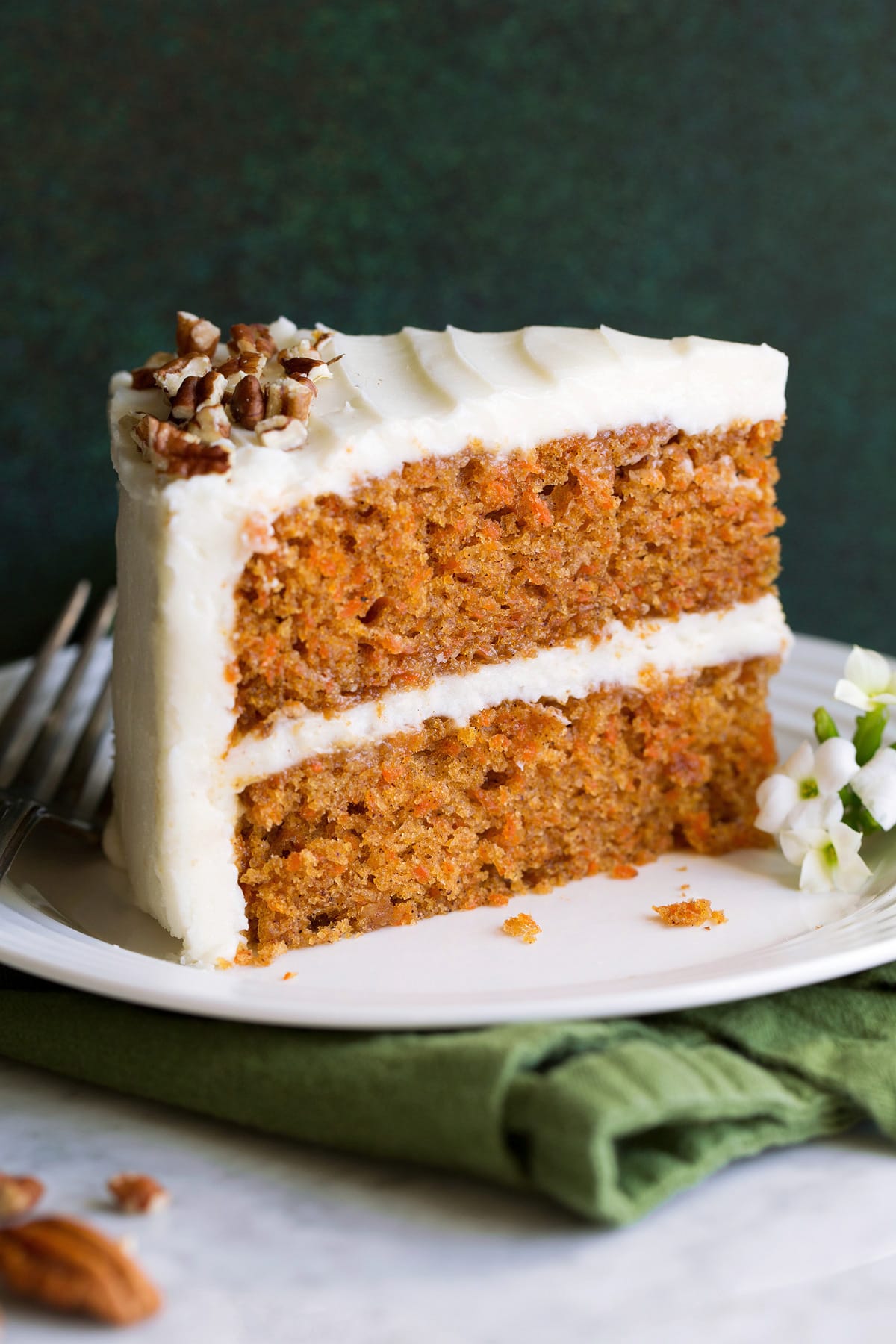
Once the cakes are completely cool, it’s time to assemble. Place one layer on a serving plate and spread a generous amount of frosting on top. Add the second layer and frost the top and sides of the cake.
For a rustic look, you can leave the sides slightly exposed (a “naked cake” style). For a more polished finish, smooth the frosting evenly all around.
If you’d like, decorate with chopped nuts, a sprinkle of cinnamon, or even small carrot-shaped icing designs.