
How to Make Caldo de Queso (Cheese & Potato Soup)
There are some dishes that feel like a warm embrace, the kind that instantly transport you to a kitchen filled with laughter, the clinking of pots, and the unmistakable aroma of something deeply comforting simmering on the stove. Caldo de queso is one of those dishes for me. This dish is rooted in the culinary traditions of northern Mexico, particularly Sonora. This humble, yet deeply satisfying soup, is proof that simple ingredients can create something extraordinary.
At its heart, caldo de queso is a potato and cheese soup, but reducing it to that description barely scratches the surface. It is a dish of contrasts: the soft creaminess of potatoes, the gentle heat of green chiles, the richness of tender cheese, and the bright freshness of herbs. It’s rustic, nourishing, and deeply personal—every family has its own variation, its own small tweaks that make it unique.
Today, I’m going to walk you through how to make a traditional caldo de queso from scratch, while also sharing tips, variations, and the little details that elevate this dish from good to unforgettable.
The Soul of Caldo de Queso
Before we get into the cooking, it’s worth understanding what makes this soup special. Unlike many cheese-based soups that rely on cream or roux for thickness, caldo de queso is broth-based. The richness comes not from heavy dairy, but from the cheese itself—traditionally queso fresco —which softens in the hot broth without completely melting away.
Another defining feature is the use of roasted green Anaheim Chiles and tomatoes. These bring a subtle smokiness and mild heat that balances the richness of the cheese and the starchiness of the potatoes.
This dish does not demand precision or expensive ingredients. What it asks for instead is attention—attention to texture, to timing, and to the layering of flavors.
Ingredients
To make a classic caldo de queso, gather the following:
- 4 medium russet potatoes, peeled and cut into bite-sized cubes
- 6 cups chicken bone broth or chicken broth (or vegetable broth for a vegetarian version)
- 2 tablespoons oil
- 2 cloves garlic, minced
- 4–5 Green Anaheim Chiles, roasted
- 4 medium Roma tomatoes, roasted
- 20 ounces queso fresco, cut into cubes
- 1 teaspoon salt (adjust to taste)
- ½ teaspoon black pepper (adjust to taste)
- Fresh cilantro for garnish (optional)
Step 1:
If you’ve never roasted chiles before, this step alone will change how you cook forever.
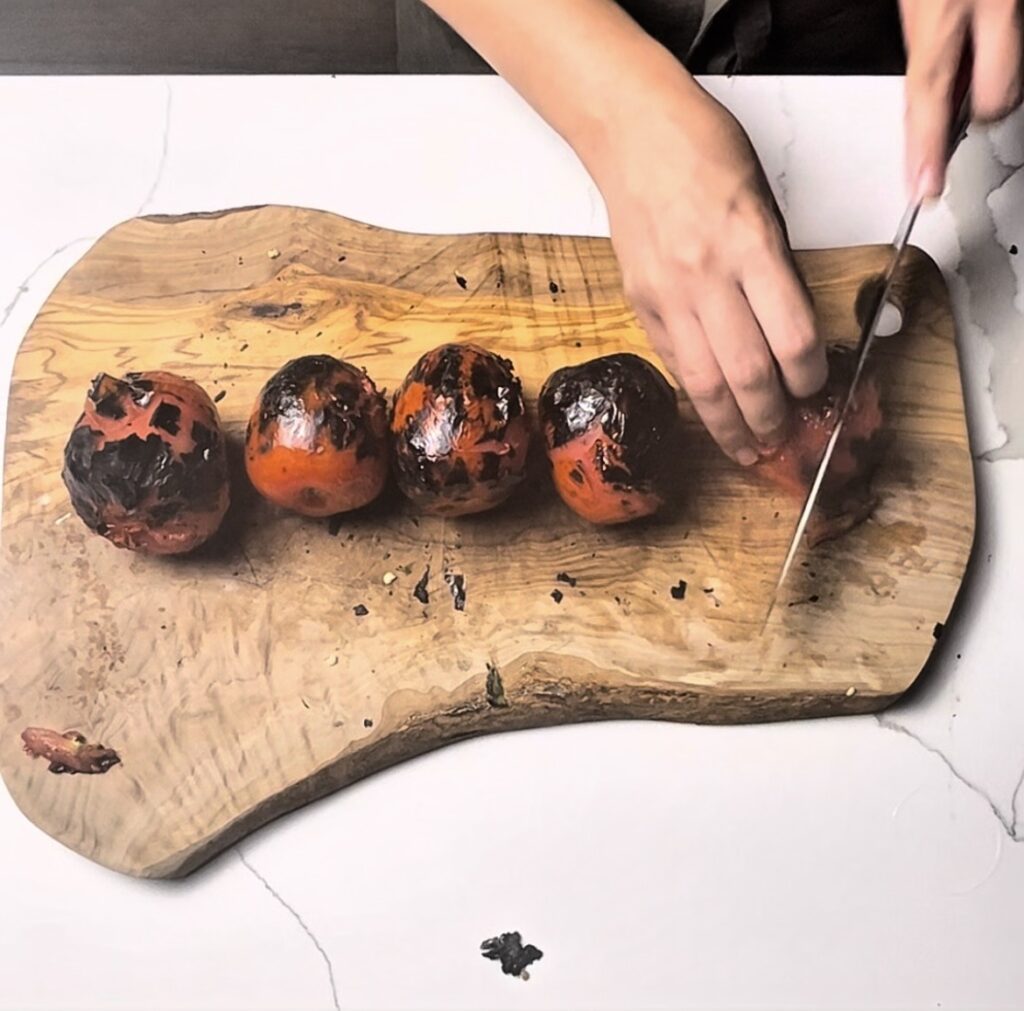
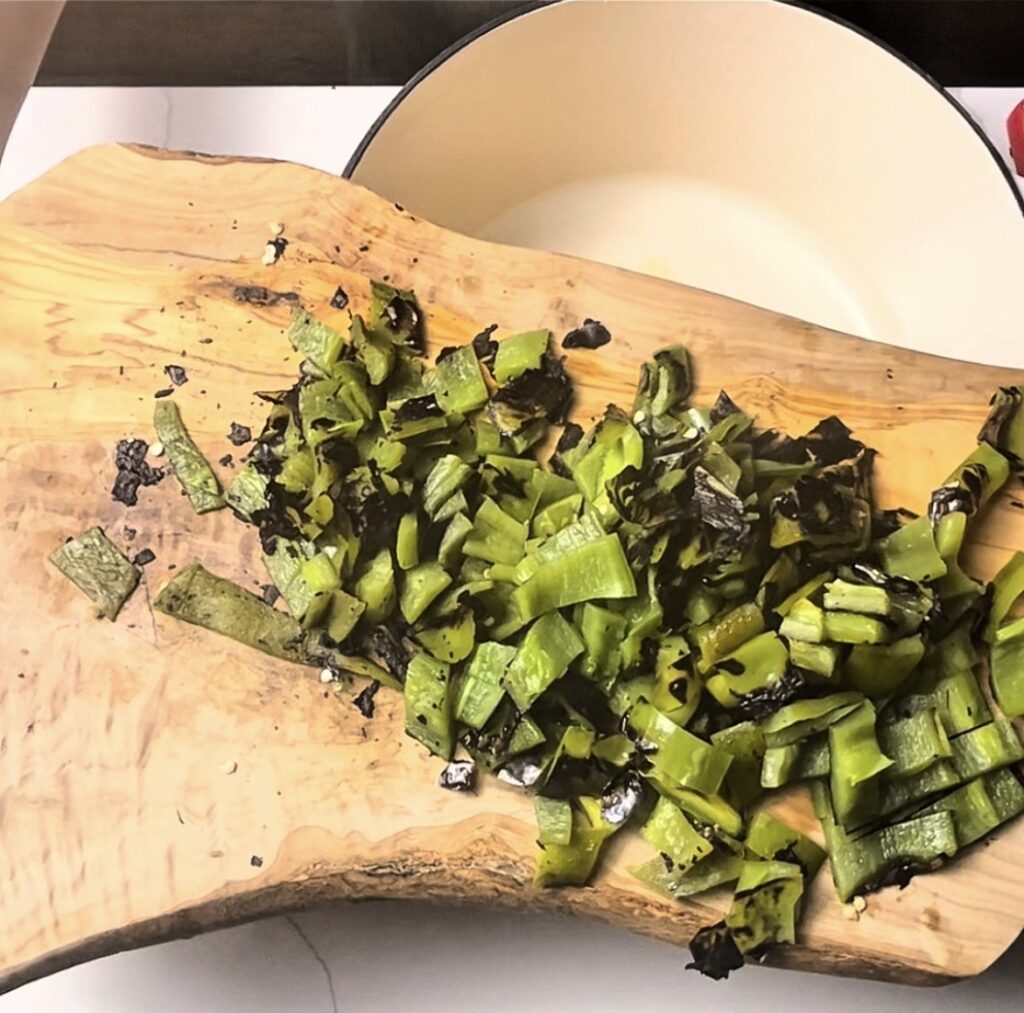
Begin with lightly oiling your green chiles and tomatoes. Next, place your chiles directly over a gas flame to chard the vegetables, turning them occasionally until the skins are blistered and blackened. This step is key, as it is what adds the flavor to the soup. Once roasted, allow them to cool off and begin slicing them into bite sized pieces. Prior to slicing the green chiles, ensure that the seeds and stems are taken out and thrown away.
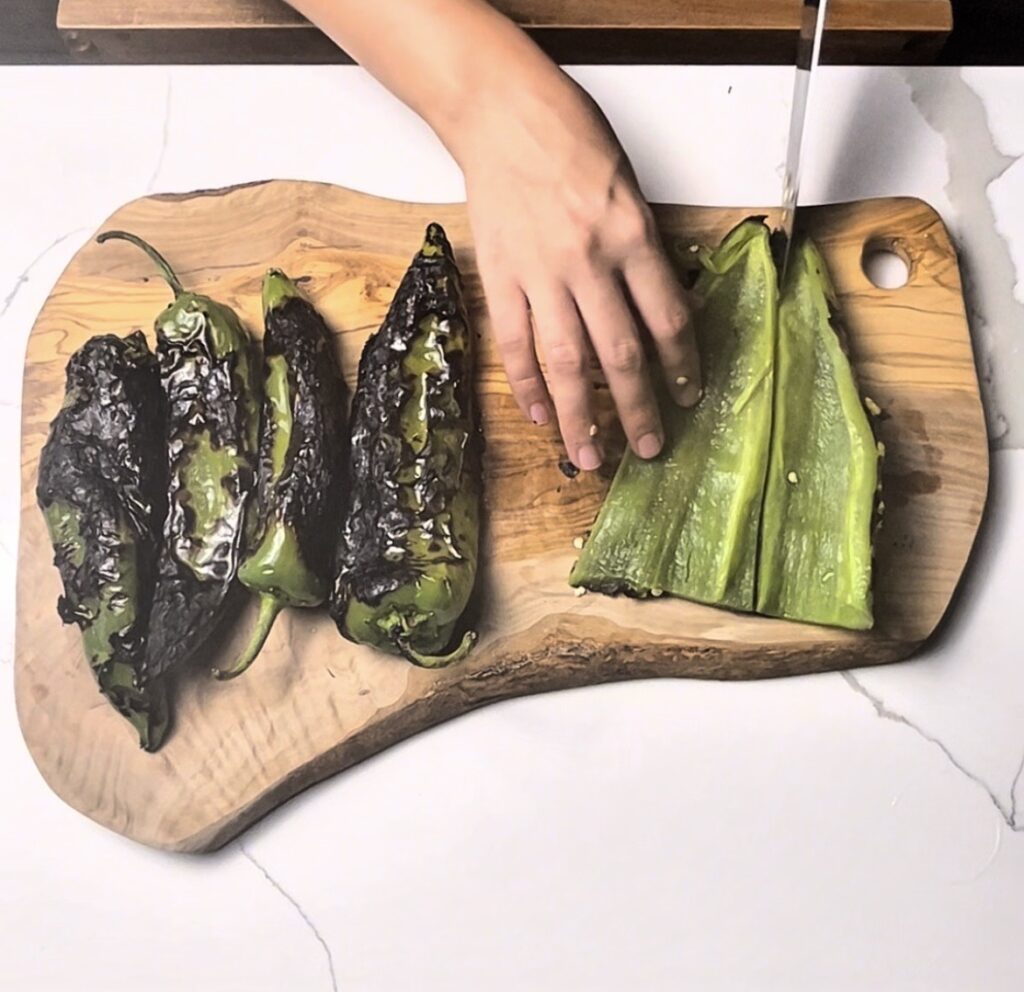
This step adds depth and smokiness that you simply can’t replicate with raw peppers.
Step 2:
In a large pot, heat a bit of oil over medium heat. Throw the sliced chiles and tomatoes into the pot and fry until you see a juice starting to come out from the vegetables and penetrate into the oil. This creates the flavor base of your soup—a slightly sweet, slightly tangy foundation that balances the rest of the ingredients. This should be stir fried for about 5 minutes.
Step 3:
Add the cubed potatoes to the pot, followed by the chicken bone broth. Season with salt and pepper. Stir everything together and bring it to a gentle boil.
Once boiling, reduce the heat to a simmer, cover the pot and let it cook until potatoes soften, but not falling apart. You want them soft enough to bite through easily, but still holding their shape.
This is an important stage of the recipe. Overcooked potatoes will turn mushy and cloud the broth, while undercooked ones will feel out of place in an otherwise comforting dish.
Step 4:
Now comes the defining step.
Add the cubes of queso fresco directly into the hot soup. Turn off the heat and let the soup sit for a few minutes.
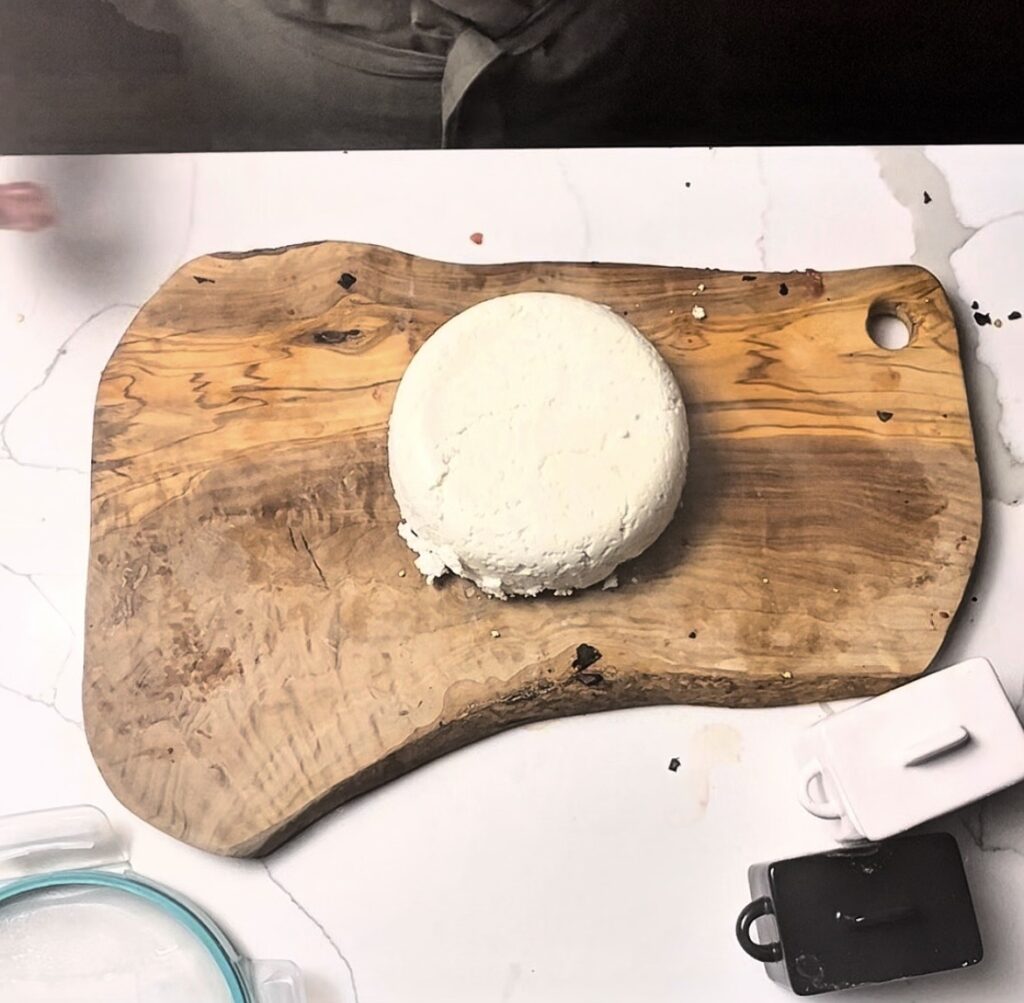
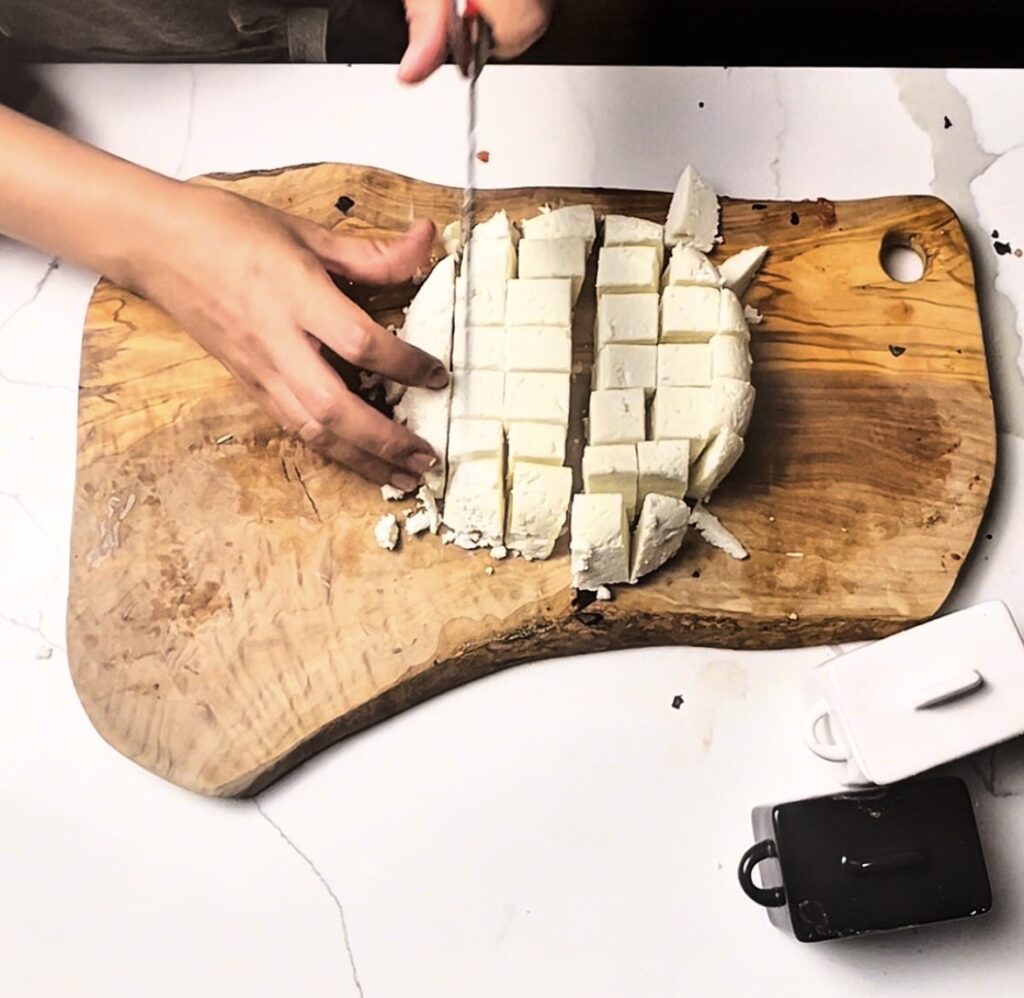
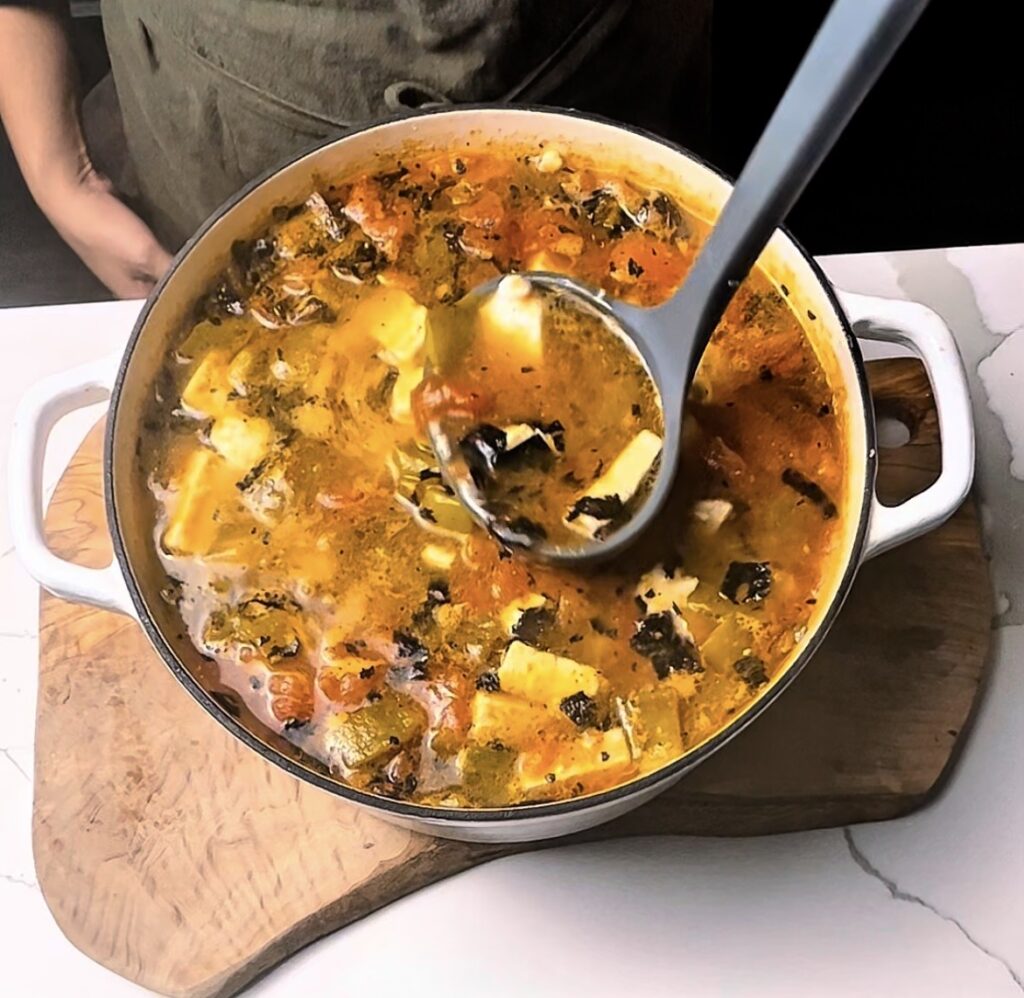
Unlike cheeses that melt completely, these cheeses soften and warm through while maintaining their shape. When you ladle the soup into bowls, each serving will have tender chunks of cheese that are creamy on the inside and slightly firm on the outside.
This textural contrast is what makes caldo de queso so special.
Step 5:
Ladle the soup into bowls and garnish with freshly chopped cilantro. Although even without the cilantro garnish, the bowl will pack a tasteful punch.
If you like, you can serve it with warm buttered up tortillas on the side. Some people also like to add a spoonful of salsa for extra heat.
Tips for the Best Caldo de Queso
Choose the right potatoes: Russet potatoes work well because they’re starchy and absorb flavor, but Yukon Gold potatoes are also a great option if you prefer.
Don’t skip roasting the chiles and tomatoes: This step defines the flavor of the dish. Raw chiles and tomatoes simply won’t deliver the same depth.
Use good-quality cheese: Since the cheese is a central ingredient, its quality matters. Look for fresh, authentic queso fresco.
Avoid over-stirring after adding cheese: You want the cubes to stay intact, not break apart into the broth.
Variations to Try
One of the beautiful things about caldo de queso is how adaptable it is.
With vegetables: Add zucchini, corn, or even carrots to make it heartier and more colorful.
Vegetarian version: Simply swap the chicken broth for vegetable broth—everything else remains the same.
A Dish That Tells a Story
Caldo de queso isn’t just a recipe—it’s a reflection of resourcefulness and tradition. It’s the kind of dish that likely began as a way to stretch simple ingredients into something filling and nourishing, and over time, it became a beloved staple.
When you make it, you’re participating in that tradition. You’re taking a handful of everyday ingredients and transforming them into something comforting and deeply satisfying.
There’s something grounding about that.
Serving and Storing
This soup is best enjoyed fresh, when the cheese is perfectly soft and the broth is hot and fragrant. However, it can be stored in the refrigerator for up to five days.
When reheating, do so gently over low heat to prevent the cheese from breaking down too much. You may microwave individual bowls as well.
Reference foodsafety.gov for best practices.
Final Thoughts
Caldo de queso is not flashy. It doesn’t rely on complicated techniques or rare ingredients. But what it offers is something far more valuable: warmth, comfort, and a sense of home.
Whether you’re making it for the first time or the hundredth, each pot carries the potential to become a memory—shared with family, enjoyed on a quiet evening, or savored on a chilly day when you need something to lift your spirits.
So take your time with it. Taste as you go. Let the aromas fill your kitchen.
And when you finally sit down with a bowl of caldo de queso, know that you’ve created something truly special.
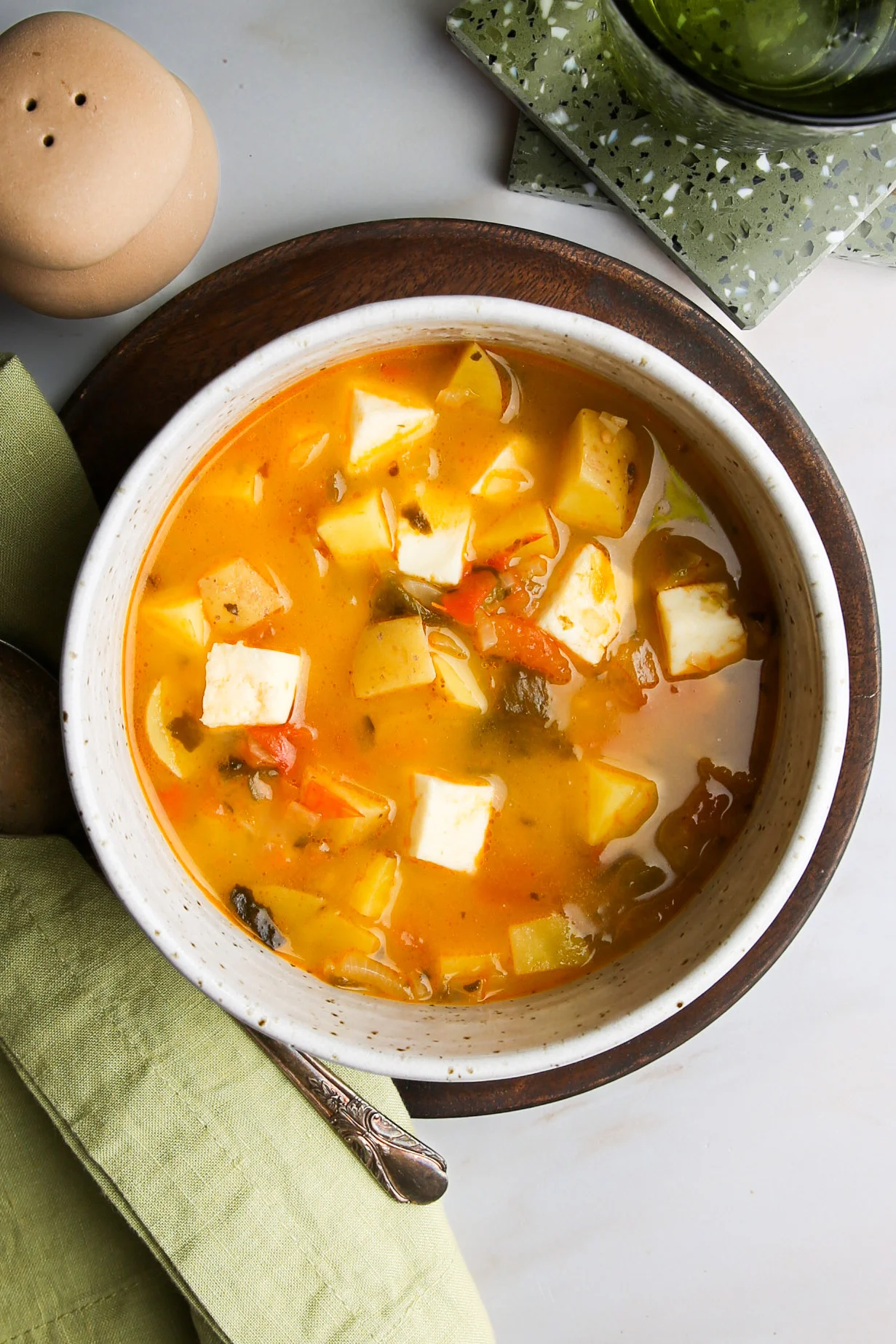
Caldo de Queso -Cheese and Potato Soup
Ingredients
Method
- Begin with lightly oiling your green chiles and tomatoes. Next, place your chiles directly over a gas flame to chard the vegetables, turning them occasionally until the skins are blistered and blackened. This step is key, as it is what adds the flavor to the soup. Once roasted, allow them to cool off and begin slicing them into bite sized pieces. Prior to slicing the green chiles, ensure that the seeds and stems are taken out and thrown away.
- In a large pot, heat a bit of oil over medium heat. Throw the sliced chiles and tomatoes into the pot and fry until you see a juice starting to come out from the vegetables and penetrate into the oil. This creates the flavor base of your soup—a slightly sweet, slightly tangy foundation that balances the rest of the ingredients. This should be stir fried for about 5 minutes.
- Add the cubed potatoes to the pot, followed by the chicken bone broth. Season with salt and pepper. Stir everything together and bring it to a gentle boil.
- Once boiling, reduce the heat to a simmer, cover the pot and let it cook until potatoes soften, but not falling apart. You want them soft enough to bite through easily, but still holding their shape.
- This is an important stage of the recipe. Overcooked potatoes will turn mushy and cloud the broth, while undercooked ones will feel out of place in an otherwise comforting dish.
- Add the cubes of queso fresco directly into the hot soup. Turn off the heat and let the soup sit for a few minutes.
- Unlike cheeses that melt completely, these cheeses soften and warm through while maintaining their shape. When you ladle the soup into bowls, each serving will have tender chunks of cheese that are creamy on the inside and slightly firm on the outside.
- Ladle the soup into bowls and garnish with freshly chopped cilantro. Although even without the cilantro garnish, the bowl will pack a tasteful punch.
- If you like, you can serve it with warm buttered up tortillas on the side. Some people also like to add a spoonful of salsa for extra heat.
Notes
- Choose the right potatoes: Russet potatoes work well because they’re starchy and absorb flavor, but Yukon Gold potatoes are also a great option if you prefer.
- Don’t skip roasting the chiles and tomatoes: This step defines the flavor of the dish. Raw chiles and tomatoes simply won’t deliver the same depth.
- Use good-quality cheese: Since the cheese is a central ingredient, its quality matters. Look for fresh, authentic queso fresco.
- Avoid over-stirring after adding cheese: You want the cubes to stay intact, not break apart into the broth.